Storm-Ready Gutters in Florida: Seasonal Maintenance Tips for Newberry Homeowners
If you live in Newberry, you already know a Florida rainstorm can go from distant thunder to sheets of water in what feels like a single minute. When that happens, your gutter system either keeps up or it does not. There is not much middle ground.

That is why storm ready gutters Florida homeowners can trust are not just about the metal hanging from the roof edge. They depend on sizing, drainage, fastening, seasonal cleaning, and plain old consistency. In this part of the state, long humid stretches, summer downpours, tropical weather, pine needles, oak leaves, and acorns all work against a gutter system. A setup that looks fine on a dry spring afternoon can struggle badly once the rainy season settles in.
I have seen this pattern over and over with homes across Central and North Florida. The trouble usually does not begin with a dramatic failure. It starts small. A little mat of pine straw near an outlet. Oak leaves packed into a corner. Water overshooting one section during the first hard storm of the year. By late summer, that same small problem can become overflow, splashback, or runoff pouring exactly where you do not want it.
Florida weather is hard on gutters in very specific ways
Florida’s storm pattern creates a different maintenance rhythm than what you would expect in a drier climate. Gutters here are not just carrying the occasional shower. They often handle intense, repeated rain events during summer, then have to be ready for tropical systems and hurricane season. Even if a storm is not severe enough to damage the house, it can dump enough rain fast enough to expose every weak point in the drainage system.
Humidity adds another layer. Organic debris does not stay crisp and dry for long. It breaks down, packs together, and creates a heavy, damp sludge that slows water flow. UF/IFAS guidance specifically warns that gutters and storm drains can become clogged with debris during storm preparation, and it recommends clearing needles, leaves, and other debris from roofs and gutters. That advice matters in Newberry because the debris we see most often here, pine needles, oak leaves, and acorns, tends to collect gradually and then lock together when wet.
There is also an environmental side to this that homeowners sometimes miss. Leaves, acorns, and yard debris that wash out of a clogged gutter do not just disappear. They can move with stormwater into drains and waterways. UF/IFAS has noted that live oak leaves and acorns contribute to stormwater nutrient pollution in Florida. So cleaning a gutter is not only about protecting fascia boards or preventing overflow at the entryway. It is also part of keeping organic debris where it belongs, on site, bagged, composted, or reused as mulch, instead of letting it wash off with the next storm.
What “storm-ready” really means
A storm-ready gutter system is one that can accept roof runoff, move it quickly, and send it away from the house without backing up. That sounds simple, but several pieces have to work together.
The gutters themselves need to be properly sized and securely fastened. The downspouts need to carry water away effectively. The outlets cannot be choked with buildup. The roof edge above the gutter needs to stay reasonably clear so debris is not constantly dropping into the trough. And the system should be checked often enough that small issues are caught before summer storms make them obvious.

Florida building requirements also matter here. Gutters and downspouts are required to be sized and discharged in accordance with the Florida code, and exterior gutters and leaders should be made of metal or approved plastic and securely fastened with corrosion-resistant fasteners. That does not tell you exactly what profile or capacity your house needs, but it does establish the basic principle: these systems need to be built for water movement and for the local environment.
Sizing matters more than many homeowners realize
A lot of people ask about gutter sizes for Florida homes after they have already noticed overflow. By then, they are usually focused on the wrong symptom. Overflow can happen because a gutter is undersized, but it can also happen because the pitch is off, the outlets are blocked, or the downspouts are not moving water away efficiently.
Still, capacity matters. A home in Newberry may face short periods of very heavy rainfall, so a gutter system that is barely adequate under normal conditions may struggle during summer storms. That is one reason homeowners compare profile types and capacities when they start looking at gutter replacement Gainesville FL or seamless gutters Ocala FL providers. A larger or better-matched system can offer more room for runoff, but only if the rest of the drainage path is also designed and maintained properly.
I always caution people against assuming that “bigger” automatically solves everything. An oversized gutter that empties into a poorly placed downspout or a discharge point that sends water back toward the home is not really an upgrade. It is just moving the choke point somewhere else.
Why K-style remains so common
You will hear plenty of homeowners ask for K-style gutters Lady Lake FL installers offer, and that makes sense because K-style is a familiar profile throughout Florida. It fits a lot of homes visually, and many contractors work with it every day. If you are comparing options, the bigger question is less about trend and more about fit: does the chosen profile, size, and installation detail match your roof area, your drainage pattern, and the kind of debris your property collects?
That is where local experience helps. Two houses with similar square footage can behave very differently in storms if one sits under pines and live oaks while the other has a more open exposure. One may need more frequent cleaning. Another may benefit from a guard system. A third may simply need better downspout placement.
Aluminum makes sense in much of Central Florida
When people shop for aluminum gutters Central Florida companies install every day, they are usually responding to practical concerns. Aluminum is widely used, and for good reason. Florida code requires exterior gutters and leaders to be made of metal or approved plastic and to be securely fastened with corrosion-resistant fasteners. In a damp climate with repeated rain exposure, that fastening detail is not trivial. Hardware and attachment quality matter just as much as the gutter material itself.
The thing I always tell homeowners is this: material choice should not be separated from workmanship. A good product installed carelessly go to the site can underperform for years. A properly installed system with secure fastening, sound pitch, and clean outlets can quietly do its job through one rainy season after another.
Newberry homes need a seasonal rhythm, not one annual cleaning
One of the most common mistakes I see is treating gutters as a once-a-year task. In Florida, that is often not enough. Summer weather, rapid plant growth, and repeated storms can refill a gutter faster than homeowners expect. UF/IFAS maintenance guidance for stormwater systems specifically notes the need to clean gutters and downspouts as needed and remove organic buildup, especially in summer. That lines up with what many homeowners here experience in real life.
A workable routine usually follows the seasons. You do not need a complicated spreadsheet, but you do need to pay attention at the right times of year.
A simple maintenance rhythm for Newberry
- Check and clear gutters before the heaviest summer rains arrive, especially if pine needles or oak leaves collect on the roof.
- Inspect again during summer, because wet organic buildup can form quickly and block outlets or downspouts.
- Look over the system before tropical weather threatens, making sure water paths are open and discharge points are clear.
- Recheck after major storms, since branches, leaves, and roof debris often appear even when the gutters seemed fine the week before.
That pattern is more effective than one big annual cleaning because it matches the way debris actually builds up here. A spring check catches dry accumulation. A midsummer check catches compacted buildup. A pre-storm-season check confirms the system can handle a surge. A post-storm look helps you find what shifted, loosened, or filled in.
Pine needles, oak leaves, and acorns are the usual troublemakers
In Newberry neighborhoods with mature trees, pine needles are often the first issue homeowners notice. They drift into the gutter, collect at outlet openings, then braid together when they get wet. They do not always create a dramatic visible blockage across the whole run. Sometimes they form a plug right where the water needs to exit.
Oak leaves and acorns create a different kind of mess. Leaves can mat down into a soft, heavy layer. Acorns settle into low spots and corners, especially if there is already damp debris present. Together they slow flow and hold moisture.
UF/IFAS recommends keeping fallen leaves and pine needles on site as mulch rather than letting them wash away. That is smart for a few reasons. It keeps organic material out of drains and waterways, it puts natural material to use in the landscape, and it reminds homeowners that roof and gutter debris is not harmless once it enters stormwater flow. If your property sheds a lot of pine straw or oak litter, the best time to remove it is before a storm carries it somewhere else.
Do gutter guards help in Florida?
The short answer is sometimes, but not always in the way people expect.
Homeowners searching for gutter guards for pine needles Florida properties can be tempted by the promise of “maintenance free.” I would not frame any guard system that way, especially under pines. Guards can reduce the volume of larger debris entering the gutter, and in some setups they absolutely help. But they do not eliminate maintenance. Fine debris can still collect on top, settle into openings, or build up around downspout transitions.
The right question is whether a guard makes your maintenance easier and less frequent, not whether it erases maintenance entirely. On one home, a guard may be worth it because the roofline is difficult to access and pine straw accumulation is constant. On another, especially where debris is mixed and heavy, the owner may still need regular checks and occasional cleaning. If you go this route, ask specifically how the system handles pine needles, not just leaves.
Downspouts are where many drainage problems reveal themselves
A gutter can look fairly clean and still fail if the downspout system is not doing its job. Downspout drainage Newberry FL homeowners need should move water away from the foundation area and keep discharge points from backing up or dumping water where it creates repeat saturation.
When I walk a property after a storm, I pay attention to where the water ends up, not just whether the gutter stayed full or empty. Is runoff spilling at the corners? Is water concentrating in one bed? Is there evidence of washout below an elbow? Does the ground near the house stay soft long after rain ends? These clues tell you whether the system is simply catching water or truly managing it.
This is one of those areas where a homeowner’s eye and a contractor’s eye can differ. A homeowner may see that the gutter did not overflow. A good installer will also look at discharge behavior, outlet placement, and whether water is being directed appropriately.
Seamless systems reduce one common weak point
When people compare sectional gutters with seamless gutters Ocala FL and nearby contractors install, they are often trying to reduce leaks at joints. That is a reasonable goal. Fewer seams usually means fewer places for water and debris to catch. It can also simplify the look of the house.
That said, a seamless run is not magic. If the pitch is wrong, if debris is allowed to build up, or if the downspouts are undersized or poorly located, seamless construction will not fix those issues on its own. It is better to think of seamless gutters as one useful part of a broader performance package rather than a stand-alone solution.
When a repair is enough, and when replacement makes more sense
Not every problem calls for a full system replacement. Sometimes gutter repair Wildwood FL homeowners seek after a storm is exactly the right move for a loose section, a fastening issue, or a localized drainage problem. If the overall system is still sound, a targeted repair can restore performance without unnecessary cost.
Replacement becomes more reasonable when the problems are widespread or recurring. If one section has already been patched several times, if fastening is failing in multiple areas, or if the system was never well suited to the roof and rainfall pattern in the first place, a piecemeal approach can become false economy. That is often when people begin pricing gutter replacement Gainesville FL companies offer, especially if they want to change size, profile, or layout at the same time.
The best decision usually comes from looking at the system during or just after a rain event, then inspecting it dry. Storm behavior tells one story. Hardware condition tells another. You want both.
Cleaning is basic maintenance, but timing makes all the difference
A lot of homeowners put off gutter cleaning Fruitland Park FL or Newberry area properties need because the gutters do not look terrible from the ground. That is understandable. From below, a gutter can seem fine even when the outlet is packed tight.
The best timing is not random. It is tied to debris cycles and weather windows. Clean after noticeable leaf or needle drop, before the heaviest summer rain stretch, and after storms that litter the roof. Waiting until the system is visibly overflowing means the gutter has already stopped doing part of its job.
This is also a good time to think about where the debris goes after removal. Since UF/IFAS encourages using pine needles and fallen leaves on site as mulch, many homeowners can repurpose at least some of what comes out of the system, provided it is not mixed with roofing grit or other contaminants. It is a practical habit that keeps material out of storm drains and gets one more use from what the yard is already producing.
Signs it is time to bring in a professional
Some gutter upkeep is simple. Some is not. If ladders, roof height, or repeated drainage issues are part of the picture, professional help is often the safer and more effective call.
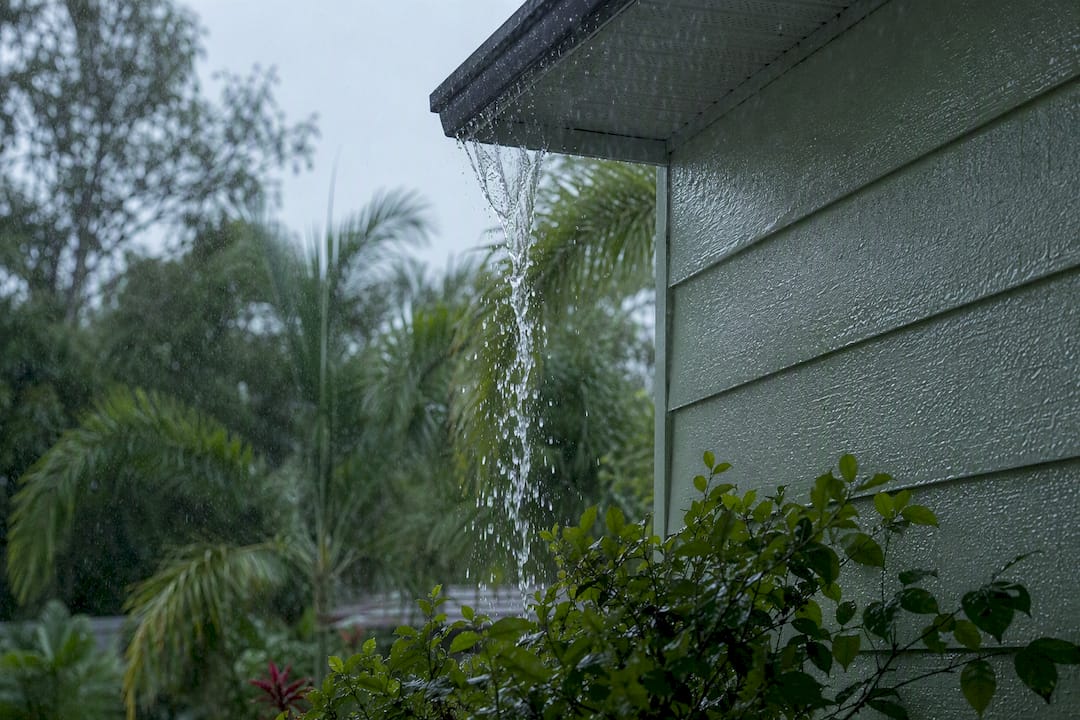
Here are the situations where I would stop guessing and talk to a pro about hiring a gutter contractor Florida homeowners can rely on:
- Water regularly overflows during heavy rain even after cleaning.
- Downspouts back up, leak at connections, or dump water too close to the house.
- Sections appear loose, uneven, or poorly fastened.
- You are unsure whether the current system is properly sized for your roof area and runoff.
- You are considering guards, seamless replacement, or a layout change and want it done to code.
A competent contractor should be comfortable discussing sizing, discharge, fastening, and debris patterns, not just price per foot. That is especially important in Florida, where the local weather is a design factor, not a footnote.
What to ask before you hire
Hiring well matters because the best-looking proposal is not always the best long-term result. If I were advising a Newberry homeowner, I would want them to ask how the contractor evaluates runoff, how they approach downspout placement, and how they account for local debris like pine needles and oak leaves. I would also want them to confirm that the system will be installed with proper fastening and materials that meet code requirements for exterior gutters and leaders.
A good conversation should feel specific to your house. If the recommendation sounds identical to what they say to every homeowner, press for detail. Ask what they noticed about your roofline, where they expect debris to collect, and what maintenance they recommend once the system is in place. These answers tell you a lot about whether you are buying a real solution or just a commodity install.
The small habits that protect a gutter system all year
The homes that seem to have the fewest gutter headaches are rarely the ones with zero trees or perfect conditions. More often, they belong to owners who pay attention in short, consistent bursts. They notice when pine straw starts to gather in roof valleys. They clear leaves before a storm, not after a backup. They look at where water lands during a downpour. They do not assume last year’s performance guarantees this year’s.
That kind of observation matters more in Newberry than people think. Our weather is demanding, but it is also predictable in one important sense: rain will test every weak spot eventually. If your gutters are clean, properly sized, securely fastened, and draining well, those tests are usually uneventful. If not, the next hard summer storm will tell you exactly where the system is falling short.
For most homeowners, the goal is not perfection. It is reliability. A gutter system that quietly handles summer rain, sheds debris before it compacts, and sends runoff where it belongs is doing the job. Keep it clean, check it seasonally, and take recurring warning signs seriously. In Florida, that is what storm-ready really looks like.